Reliable equipment is part of the daily infrastructure of an aesthetic practice, yet maintenance is often treated as a task that begins only after something goes wrong. Regular inspection, careful cleaning, appropriate storage, cooling checks, and timely servicing can help clinics protect equipment performance and reduce avoidable interruptions.
Aesthetic medical equipment also operates around optical, electrical, and thermal components that require procedures suited to the specific device. ENZOEYS, whose portfolio includes professional laser equipment for applications such as pigmentation, tattoo, and skin treatments, provides a useful context for understanding why maintenance should be incorporated into routine clinic operations.
Build Maintenance Around Daily Use
The simplest maintenance habit is a consistent pre-use inspection. Operators can check the handpiece, treatment window, cables, connectors, display, ventilation openings, and visible surfaces before the first appointment. Any unusual sound, warning message, physical damage, or unexpected output should be documented and assessed rather than ignored.
Cleaning procedures should follow the manufacturer’s instructions because optical components and electronic surfaces may react differently to cleaning agents. FDA-cleared device documentation commonly advises users to avoid applying liquids directly to consoles and to use specified cleaning methods rather than improvised alternatives.
The treatment area deserves attention as well. Dust, moisture, excessive heat, and poor ventilation can affect equipment conditions over time. A maintenance routine becomes more useful when staff record inspections and problems instead of relying on memory, creating a practical history that can be reviewed by technicians when service is required.
Protect Optical Components and Handpieces
Laser handpieces contain precision optical components, making physical handling particularly important. Dropping, striking, excessive bending of connected components, or opening parts without authorization can create problems that may not be visible during a quick inspection. FDA device documentation specifically cautions against unauthorized opening of laser handles and emphasizes inspection and cleaning of optical surfaces.
Storage practices matter just as much as treatment-room handling. Equipment should remain in the environmental conditions specified by its manufacturer, with protection from dust, moisture, direct sunlight, and other potentially damaging conditions. Long periods without use may require additional preparation, particularly where liquid cooling is involved.
A practical clinic routine can assign responsibility for cleaning and inspection after each treatment session, while deeper technical checks remain with qualified service personnel. This separation reduces the chance that routine operators attempt repairs that require specialist knowledge.
Keep Cooling and Operating Conditions Under Control
Heat management deserves particular attention because many laser devices depend on cooling components during operation. Insufficient cooling can affect device performance and may create safety concerns. FDA guidance for aesthetic equipment identifies cooling performance and temperature control as areas that should be addressed through appropriate design, testing, and operating instructions.
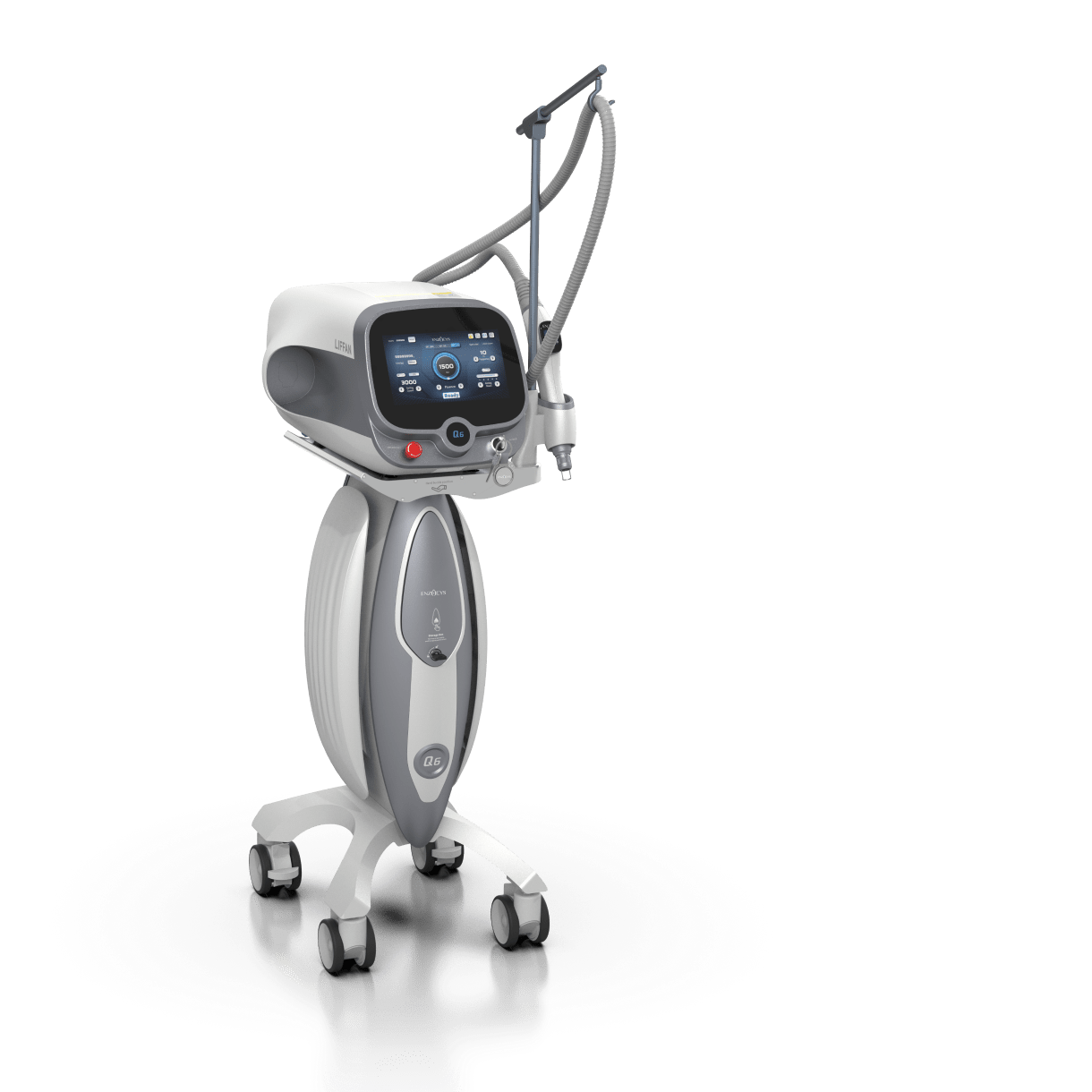
The LIFFAN Q6 from ENZOEYS illustrates why cooling capacity can be relevant to maintenance planning. Its published specifications describe an advanced cooling arrangement designed for 24-hour continuous operation, while the device also supports SPT and HPT modes and multiple spot sizes. These specifications do not remove the need for maintenance; instead, they indicate why cooling components should remain part of a clinic’s inspection routine.
Staff can monitor warning indicators, unusual temperature behavior, ventilation, and other manufacturer-specified checks during routine operation. More involved inspections of cooling circuits, internal components, or electrical parts should be handled according to the manufacturer’s service instructions rather than improvised by operators.
Match Maintenance to Device Type
Different forms of aesthetic dermatology equipment have different maintenance priorities. Laser devices may require particular attention to optical windows, cooling circuits, handpieces, and energy delivery components. Light-based equipment can have different cleaning and inspection requirements, while accessories and patient-contact surfaces may require their own procedures.
Maintenance intervals should also reflect usage rather than relying on a universal calendar. A device used heavily every day may require more frequent inspection than equipment used occasionally. Manufacturer recommendations, operating hours, error records, and observed wear can all contribute to an appropriate service schedule.
Training plays a significant role here. Operators should know which checks belong to normal daily care and which conditions require the device to be taken out of service. Internal repairs should be performed only by personnel authorized or appropriately trained for the specific device and in accordance with the manufacturer’s service documentation.
Create a Preventive Service Record
Written records turn maintenance from an informal habit into a manageable clinic process. Each entry can include the date, operating hours where available, inspection results, cleaning performed, warning messages, parts replaced, and technician service details. Patterns become easier to identify when information is recorded consistently.
Service documentation can also support purchasing and budgeting decisions. Repeated faults involving the same component may indicate that additional technical evaluation is needed, while predictable servicing can be planned around quieter periods. Clinics managing several devices can use the same basic record structure while adapting individual checklists to each model.
The published specifications of the LIFFAN Q6 include multiple applicators, including 1064 nm ZOOM sizes of 2–6 mm, a 532 nm ZOOM size of 2–4 mm, an 8 × 8 mm fractional applicator, and a 6 mm collimation option. Such configuration details make model-specific inspection important because different applicators and optical surfaces may require different handling according to the manufacturer’s instructions.
Conclusion
Equipment maintenance works best as an ongoing operational discipline rather than an emergency response. Aesthetic medical equipment benefits from regular inspection, appropriate cleaning, controlled environmental conditions, cooling checks, careful handpiece handling, and qualified technical servicing.
Clinics can also gain greater visibility into equipment condition by keeping service records and separating routine operator tasks from specialist repairs. Proper maintenance practices should always follow the instructions supplied for the specific model, while manufacturers such as ENZOEYS can provide the product documentation needed to establish model-specific care procedures.
