Industrial power equipment selection requires more than comparing rated capacity and purchase price. Many misunderstandings appear when buyers only focus on simple specifications without considering actual working conditions. A generator system contains different components, and the alternator is the electrical conversion part that changes mechanical energy into electrical energy. EvoTec Power focuses on manufacturing alternators for industrial, marine, and customized applications, supporting professional system integration requirements.
Myth 1: A 30 kva generator Always Provides 30kW Continuous Output
A common misconception is that a 30kVA rating means the equipment can continuously supply 30kW power. However, kVA and kW represent different electrical values. The relationship between them is affected by power factor. With a common power factor of 0.8, the actual active power output is lower than the apparent power rating.
This misunderstanding may affect industrial equipment matching. Motors, pumps, compressors, and other inductive loads usually have different starting requirements compared with simple resistive loads. Engineers need to analyze the complete load profile before selecting an alternator instead of relying only on the rated number.
When evaluating a 30 kva generator application, buyers should understand that the alternator is not the entire generator system. The engine creates mechanical energy, while the alternator converts this energy into electrical output. Correct matching between components helps maintain stable performance in industrial environments.
Myth 2: Commercial and Construction Environments Need the Same Protection
Another purchasing mistake is assuming that commercial installations and construction sites require identical protection standards. These two environments often have different operating conditions. Commercial projects may prioritize stable operation, while construction locations may face dust, vibration, temporary installation conditions, and changing weather.
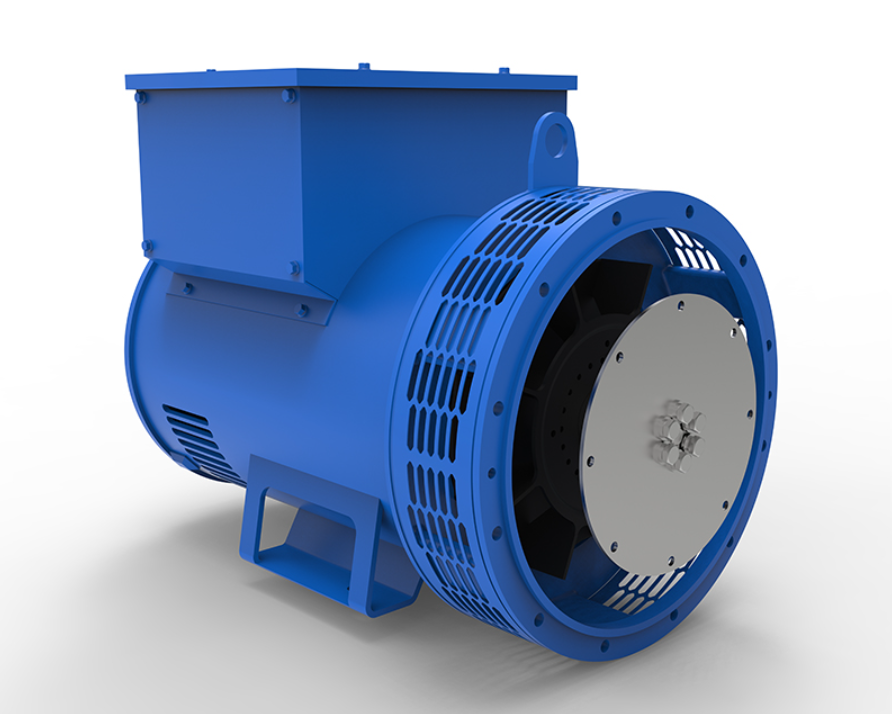
Alternator design should consider ventilation, insulation protection, and environmental requirements. The EVO188 Series Industrial Alternator developed by EvoTec Power uses a short structure design that helps reduce installation space and improve ventilation efficiency. This design approach can support easier integration into different equipment configurations.
The EVO188 series supports 400V and 480V voltage options, 50/60Hz frequency, and 2/4/6/8/10 pole selections. The additional marine varnish protection helps improve moisture resistance and supports applications where humidity and environmental exposure require additional consideration.
Myth 3: Less Than 20% Single-Phase Imbalance Means Complete Safety
Some users believe that keeping single-phase imbalance below 20% completely prevents alternator damage. However, electrical balance depends on multiple factors, including operating duration, cooling conditions, load characteristics, and internal design.
In industrial applications, uneven phase distribution may increase temperature rise and create additional stress on electrical components. A single percentage value cannot represent every operating situation. Engineers should review the overall electrical arrangement and consider how different equipment loads operate together.
For projects requiring a 45 kva generator solution, similar principles should be applied during evaluation. Capacity selection should match the expected load demand, application environment, and system configuration. Technical analysis is more reliable than choosing equipment based only on basic capacity labels.
Myth 4: Low-Cost Aluminum Wire Can Replace Industrial Copper Designs
Reducing procurement costs is important for many industrial buyers, but material selection directly influences long-term operation. One common misunderstanding is that low-cost aluminum wire designs can replace copper-based industrial solutions without affecting performance.
Copper and aluminum have different conductivity and thermal characteristics. In continuous industrial applications, material differences may influence heat control, electrical efficiency, and maintenance requirements. Selecting materials only according to initial cost may overlook factors related to long-term operating conditions.
EvoTec Power develops alternator products with reliable material selection and practical structural design. Their product portfolio covers industrial alternators, high-voltage alternators, marine alternators, and customized solutions. The company also focuses on product development and has obtained more than 67 national patents.
Technical Evaluation Helps Avoid Incorrect Purchasing Decisions
Industrial users should evaluate alternators according to technical standards instead of simple assumptions. Rated capacity, power factor, voltage requirements, environmental conditions, and material selection all affect actual operating results.
The EVO188 Series Industrial Alternator provides a power range of 25/54kVA and supports 400V and 480V generator applications. Its compact structure design, maintenance considerations, and ventilation features are developed for industrial equipment integration. These characteristics help users consider more than only the initial purchasing cost.
When comparing options such as a 45 kva generator, buyers should focus on whether the alternator specification matches the actual project requirements. Similar evaluation methods are also necessary for a 30 kva generator selection, especially when equipment operates under different load conditions.
Conclusion
Reliable power generation planning depends on accurate technical evaluation. Misunderstanding kVA ratings, ignoring environmental differences, overlooking load balance, or selecting materials only by price may create unnecessary operational challenges.
For industrial projects requiring a 45 kva generator, professional selection of the alternator component is an important step. EvoTec Power provides alternator solutions for industrial, marine, and customized applications, helping partners select suitable products according to engineering requirements. Using technical standards instead of low-cost purchasing assumptions allows businesses to build more practical power systems.
