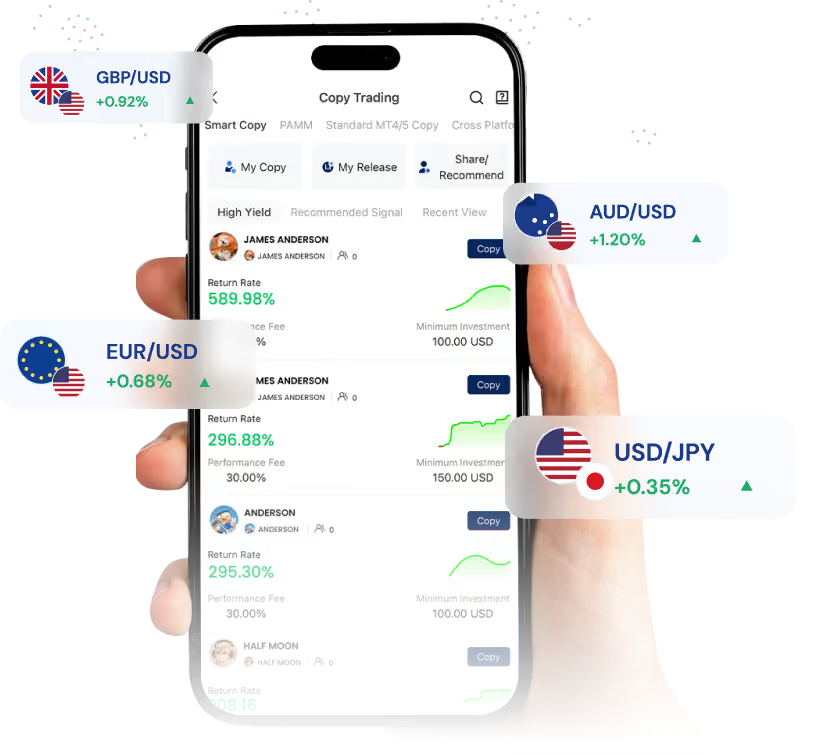
Participation in the foreign exchange market has expanded beyond traditional self-directed trading. Through a copy trading platform, retail investors can automatically replicate the positions of experienced strategy providers. This model allows individuals to participate in market movements without spending hours analyzing price charts or executing manual trades. However, automated replication alone does not guarantee favorable outcomes. The real differentiator between sustained growth and severe capital depletion lies in how well an investor evaluates performance metrics.
Choosing a signal provider requires a thorough understanding of historical statistics, risk metrics, and strategy behaviors. A modern forex copy trading platform provides extensive analytical dashboards, but raw numbers can be misleading if viewed without context. Investors must learn to evaluate data holistically, separating short-term performance spikes from stable, repeatable trading methodology.
The Role of Transparency in Copy Trading
Automated account mirroring relies on data accuracy. When capital is allocated to follow a signal provider, the client expects exact account stats, real-time exposure monitoring, and verifiable history. Transparency protects market participants from high-risk tactics that look lucrative on the surface but hide structural vulnerabilities.
Platforms like GTCFX emphasize clear reporting, offering investors unfiltered access to crucial trading parameters. When evaluating strategy profiles on GTCFX, users can assess past equity curves, trade duration, percentage return on investment, maximum drawdown, and total assets under management. Understanding these metrics enables investors to build a diversified portfolio of signal providers that aligns with their specific risk tolerance.
Deconstructing Core Performance Metrics
Evaluating a strategy provider involves looking far deeper than total profit. Focusing exclusively on raw return on investment often leads investors to select high-risk accounts that are prone to sudden collapses. A comprehensive performance analysis requires balancing multiple statistical indicators.
Return on Investment and Net PnL
Return on Investment, measured as a percentage, indicates capital growth over a given timeframe. Net Profit and Loss reflects the absolute monetary gain or loss in base currency. While high percentage returns attract attention, they must be weighed against account age and deposit size. A strategy achieving significant returns on a micro account may employ aggressive leverage that would prove unsustainable on larger account balances.
Maximum Drawdown
Maximum drawdown measures the largest peak-to-trough decline in account equity during a specific period. It indicates the peak financial stress a strategy experienced before reaching new highs. A low drawdown combined with moderate returns generally signals disciplined risk management, whereas drawdowns exceeding fifty percent suggest aggressive position-sizing or the absence of stop-loss protection.
Risk-Adjusted Returns and the Sharpe Ratio
The Sharpe ratio evaluates excess return relative to total volatility. A higher Sharpe ratio indicates that gains were achieved through steady performance rather than extreme equity swings. On a robust forex copy trading platform, strategies with higher risk-adjusted efficiency provide smoother equity curves, making them more suitable for long-term capital allocation.
Identifying High-Risk Trading Behaviors
Performance charts often mask underlying structural risks. Investors evaluating trader profiles on GTCFX should watch for specific trading behaviors that create artificial short-term stability at the expense of long-term account survival.
Grid trading and martingale strategies represent two common approaches that distort performance statistics. In a grid system, orders are placed at set intervals regardless of market direction. In a martingale system, position sizes double after losing trades to recover previous losses upon reversal. While these strategies can yield smooth upward equity lines for extended periods, an unfavorably prolonged market trend can trigger rapid, catastrophic drawdowns.
Another red flag is holding unhedged losing positions open for long periods to maintain a high win rate percentage. If closed trades show exclusively positive results while equity remains significantly lower than balance, open drawdown is being concealed. Examining equity growth alongside account balance growth provides a true picture of operational health.
Portfolio Allocation and Leverage Management
Analyzing performance data serves a practical purpose: constructing a resilient allocation strategy. Relying on a single signal provider creates concentrated operational risk. A structured approach involves spreading capital across multiple providers operating in different currency pairs or using distinct strategy models.
Leverage management plays an equally vital role in copy trading success. Even if a master trader maintains conservative position sizing, copied trades must align proportionally with the follower account balance. GTCFX provides flexible allocation settings, allowing users to adjust copy ratios, set maximum drawdown limits, and stop copying automatically if specified equity boundaries are breached.
Account monitors should regularly review trader activity to confirm that historical patterns remain consistent. If a master trader suddenly increases leverage, changes trading frequencies, or shifts from standard major currency pairs to volatile exotic instruments, investors should re-evaluate their exposure promptly.
Selecting the Right Forex Copy Trading Platform
The infrastructure supporting automated trade replication significantly impacts execution quality. Slippage, execution speed, and transparent pricing structures dictate whether a follower’s account matches the results of the signal provider.
A reliable copy trading platform minimizes execution latency between the master account and slave accounts. GTCFX utilizes advanced technological routing to ensure orders execute smoothly across multi-asset classes, including currency pairs, precious metals, and index derivatives. This institutional framework ensures that performance statistics seen on analytical dashboards translate accurately into real account execution.
Beyond trade execution, platform usability matters. Clear visual charts, customizable risk controls, mobile accessibility, and detailed historical trade logs empower investors to make informed decisions without technical friction.
Making Informed Decisions for Sustainable Results
Mastering performance data transforms copy trading from passive speculation into a structured investment discipline. High percentage returns mean little without considering maximum drawdown, historical consistency, leverage habits, and risk-adjusted efficiency. By scrutinizing trader statistics on GTCFX, investors can distinguish between durable trading competence and temporary market luck.
Success on a forex copy trading platform requires continuous evaluation, diversified capital allocation, and strict risk parameters. With transparent data tools and precise control settings, market participants can navigate global financial markets with enhanced clarity, discipline, and confidence.
