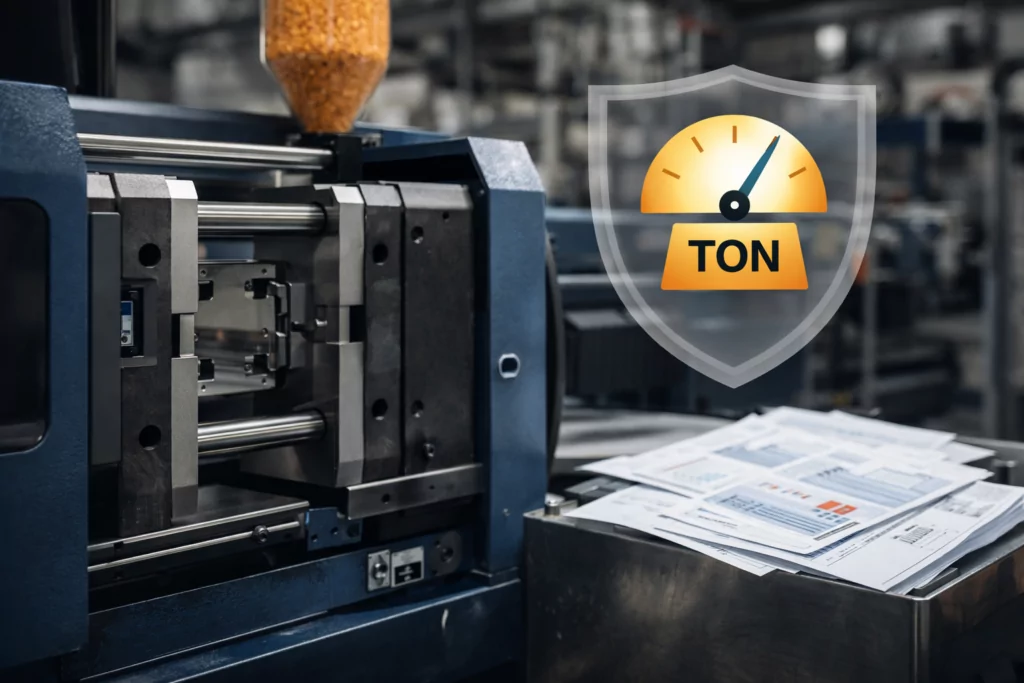
In injection molding, variation is often a greater challenge than shrinkage itself. Even when average shrinkage values are known, fluctuations between production cycles can lead to inconsistent product quality. This article is intended for operations managers and engineers who need to manage variability at scale. By improving injection molding shrinkage calculation and refining methods for calculating shrinkage injection molding, businesses can stabilize production and reduce waste.
Identifying Sources of Shrinkage Variatio
Shrinkage variation arises from multiple sources, including material inconsistencies, process fluctuations, and environmental conditions. For example, slight changes in material batches can alter shrinkage behavior, requiring adjustments in injection molding shrinkage calculation.
Process-related factors are equally important. Variations in injection pressure, mold temperature, or cooling time can lead to differences in part dimensions between cycles. Identifying these sources is the first step toward improving calculating shrinkage injection molding accuracy.
To address this, manufacturers often implement monitoring systems that track key process parameters in real time. By correlating these parameters with dimensional data, engineers can refine their injection molding shrinkage calculation models and detect deviations early.
Strategies for Controlling and Reducing Variability
Once sources of variation are identified, targeted strategies can be applied. Standardizing process settings is essential for maintaining consistency. Automated control systems help ensure that parameters remain within defined limits, supporting more reliable calculating shrinkage injection molding outcomes.
Material management is another critical area. Using consistent suppliers and maintaining proper storage conditions can reduce variability in shrinkage behavior. Additionally, optimizing mold design—such as improving cooling channel layout—can minimize uneven shrinkage across the part.
Data-driven approaches are increasingly used to enhance control. By collecting and analyzing production data, manufacturers can continuously improve their injection molding shrinkage calculation methods. This iterative process leads to more stable and predictable results over time.
Livepoint Tooling has developed practical solutions that help clients manage these challenges. By combining engineering support with process optimization, they enable businesses to achieve consistent quality even in high-volume production environments.
Building Stability in High-Volume Production
Consistency is the foundation of efficient manufacturing. When injection molding shrinkage calculation is integrated with real-time monitoring and process control, variability can be significantly reduced. At the same time, improving calculating shrinkage injection molding methods ensures that production remains aligned with design specifications.
For businesses seeking to scale operations, managing shrinkage variation is not just a technical requirement—it is a strategic necessity. With structured processes and experienced partners like Livepoint Tooling, manufacturers can transform variability into stability and maintain a competitive edge in the market. For managing Shrinkage Variations in Injection Molding, dimensional control should combine material shrinkage data with measured trial samples, because packing pressure, cooling time, wall thickness, and material batch can all change the final size. In managing Shrinkage Variations in Injection Molding, recording these measurements gives quality teams a clearer path for tracing deviations and deciding whether the correction should come from tooling, process settings, or material control. Livepoint Tooling can help connect cavity compensation, mold review, and trial feedback before the project moves into regular production for managing Shrinkage Variations in Injection Molding. Recording these measurements in managing Shrinkage Variations in Injection Molding gives quality teams a clearer path for tracing deviations and deciding whether tooling, process settings, or material control should be adjusted. Livepoint Tooling can help connect cavity compensation, mold review, and trial feedback for managing Shrinkage Variations in Injection Molding before regular production begins.
