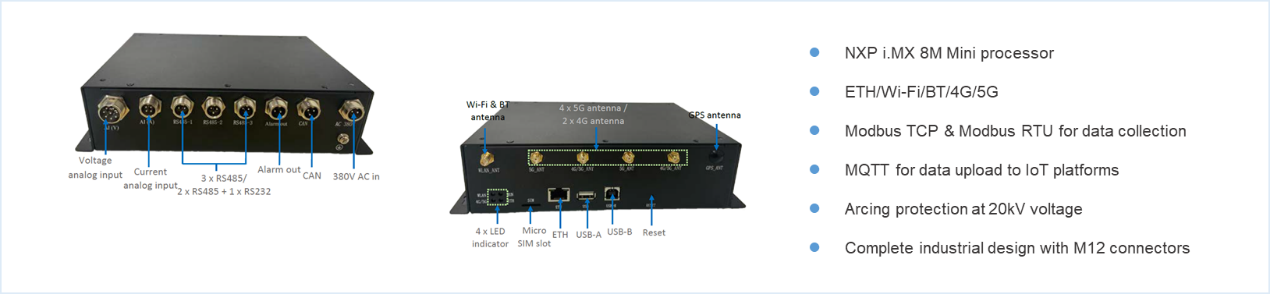
Predictive maintenance helps manufacturers identify equipment deterioration before it causes an unplanned stop. Its effectiveness depends on reliable machine data, timely analysis, and a clear response workflow. An edge gateway can connect legacy equipment with monitoring systems while processing data locally.
- Why Predictive Maintenance Starts with Data Quality
Maintenance models depend on useful input. Motors, pumps, compressors, conveyors, and CNC machines may expose temperature, vibration, current, pressure, operating hours, and fault codes. Some values come from PLCs over industrial Ethernet; others come from serial devices or added sensors.
These sources may use different protocols, intervals, and formats. Inconsistent scaling or timestamps can cause analytics software to make normal changes for faults or overlook developing problems.
Before buying hardware, teams should identify critical assets, signals linked to deterioration and required collection intervals. This keeps the project focused on actionable maintenance needs rather than collecting large volumes of data without a clear purpose.
- What an Edge Gateway Contributes
A factory edge computing gateway can connect field equipment to local software and higher-level systems. Depending on the model, it may support protocols such as Modbus RTU or Modbus TCP, then use an upstream protocol such as MQTT to send selected information to a monitoring application or cloud service.
Local processing can filter duplicate readings, aggregate data, apply thresholds, and structure messages before transmission. This reduces network traffic without sending every raw sample to a remote server.
For example, a gateway can collect motor temperature and vibration indicators, attach equipment identifiers and timestamps, and pass the results to a maintenance platform. A configured limit may trigger an alert for investigation. Predictive results still depend on suitable sensors, validated data, effective models, and sound maintenance procedures.
- Decide What Belongs at the Edge
Simple rules, data normalization, filtering, and short-term buffering are often suitable for local processing. Large-scale model training, fleet comparisons, and long-term trend analysis may be better handled by a central server or cloud platform with more storage and computing resources.
Practical architecture divides responsibilities. Field devices provide machine signals; the edge layer validates, organizes, and forwards data, while handling time-sensitive rules when needed. A supervisory or cloud layer stores history, compares assets, and supports dashboards and analysis. Alerts then reach technicians through an approved workflow.
During network interruptions, a gateway with local buffering may retain readings and forward them after connectivity returns. Confirm buffer capacity, behavior when storage fills, and timestamp preservation. These details matter when maintenance decisions depend on a continuous history.
- Build Compatibility into the Design
A predictive-maintenance project may involve equipment from several vendors and generations. Check each device’s protocol, interface, register map, access rights, and communication timing. Where relevant, verify the gateway’s client or server role. Test units, scaling, byte order, and error handling with representative equipment before wider deployment.
The industrial edge computing solution must also fit the physical environment. Control cabinets may face electrical noise, vibration, dust, and temperature variation. Review operating temperature, input voltage, mounting, isolation, and serial and Ethernet port counts. Cellular or wireless links may help with remote assets, but coverage, antenna placement, fees, and fallback behavior require site checks.
Security is equally important. Segment operational technology networks, restrict access, protect credentials, and define how software updates are approved. Remote monitoring can reduce site visits, but remote access must follow factory cybersecurity policies. The gateway should fit the security design rather than create an unreviewed path into the control network.
- Turn Alerts into Maintenance Actions
Monitoring creates value only when staff can act on findings. Define alert levels, escalation rules, and the evidence technicians need before scheduling work. Thresholds should reflect equipment type, operating conditions, and historical behavior rather than use one setting for every machine.
Track confirmed faults, false alarms, repairs, and the time between an alert and intervention. These results help engineers refine data collection and detection rules. A pilot on a few high-impact assets can reveal missing signals, connectivity gaps, and workflow problems before the system expands across the plant.
Vantron’s gateway portfolio includes options for industrial protocol connectivity, local edge processing, and communication with IoT platforms. Capabilities vary by model, so confirm interfaces, supported protocols, software options, and remote-management compatibility against project needs. Documentation and integration support should be assessed alongside hardware.
- Evaluate Total Cost and Long-Term Fit
Compare solutions by lifecycle cost, not purchase price alone. Engineering hours, integration, installation downtime, connectivity fees, cybersecurity maintenance, and replacements all affect economics. Ask suppliers about product availability, software updates, development resources, and field troubleshooting. For multi-line deployments, consistent configuration and remote diagnostics may reduce the effort needed to maintain distributed devices.
Start with a measurable goal, such as reducing unplanned stops on one critical machine or shortening the time between an abnormal signal and inspection. Establish a baseline, run a pilot, and review results with operations, maintenance, IT, and procurement. Choose an architecture that meets the target without unnecessary complexity.
Making Predictive Maintenance Work
An edge gateway supports predictive maintenance by helping teams collect, standardize, process, and deliver machine data. The right design balances protocol compatibility, local processing, secure connectivity, industrial durability, and maintainability. Validate the full data path in a pilot and link alerts to clear maintenance actions. Explore gateway options through Vantron and confirm the specifications required for the deployment.
