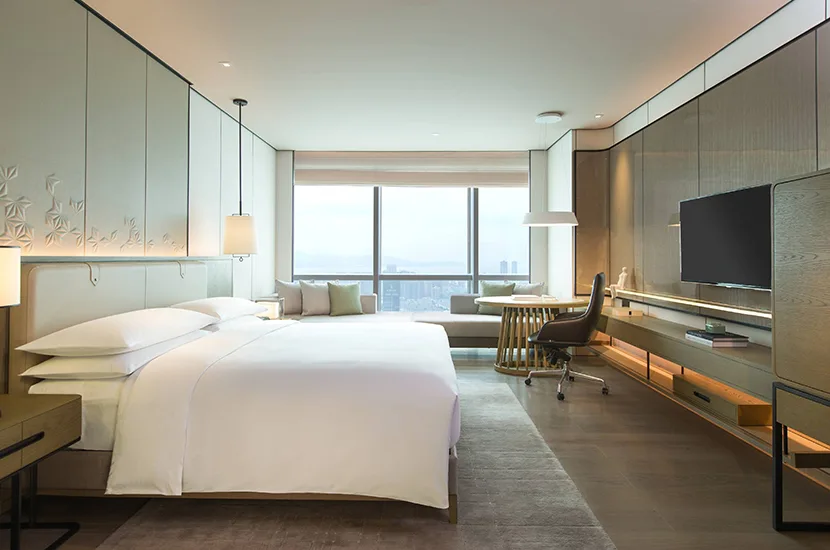
Guestroom furniture has to do more than make a room look finished. Each piece should support the way guests sleep, store belongings, work, and prepare for the day, while meeting the hotel’s operational and maintenance requirements. Well-planned hotel room furniture packages bring these elements together through coordinated specifications, compatible dimensions, and consistent finishes. Understanding what belongs in the package helps hotel owners avoid missing items, mismatched designs, and costly adjustments during installation.
Start With the Essential Guestroom Casegoods
The bed is usually the central piece of a guestroom, both visually and functionally. Its frame should provide stable support during repeated use, while the headboard needs durable upholstery or a finish that can withstand regular contact. Noise-free construction is also important: loose joints or friction between components can disturb guests, particularly in quiet rooms.
Storage furniture deserves equal attention. A wardrobe should provide sufficient hanging space, practical shelving, and durable hinges, while bedside tables keep personal belongings within easy reach. Desks, luggage racks, and drawers can be specified according to room size and guest profile. Together, these pieces form the functional foundation of hotel guest room furniture, rather than serving merely as decorative additions.
The room layout determines which items are necessary and how large they should be. A compact urban room may benefit from a wall-mounted desk or a wardrobe with integrated shelving, whereas an extended-stay property may require more storage and a larger work surface. Reviewing the floor plan before finalizing specifications helps prevent furniture from obstructing doors, circulation paths, or access to electrical outlets.
Include Furniture That Supports Daily Guest Needs
Mini bars and beverage stations are common additions in many hotel categories. Their internal layout should accommodate the equipment selected for the property, with adjustable shelving where different bottle or snack sizes need to be stored. Scratch-resistant surfaces are useful in areas exposed to frequent handling, while accessible power connections make installation and servicing more straightforward.
Bathroom vanities should be treated as part of the overall guestroom specification, even though they occupy a separate functional area. Moisture resistance is essential around sinks, where repeated exposure to water and cleaning products can damage unsuitable materials. Depending on room category and available space, a vanity may feature a single or double sink, practical storage, and a countertop designed to resist fingerprints and everyday wear.
Other items can be added according to the hotel’s service model. Full-length mirrors, occasional chairs, ottomans, and bedside lighting support different aspects of the guest experience. A business-oriented property may prioritize a functional desk and task chair, while a resort room may allocate more space to seating and luggage storage. The most useful hotel room furniture packages reflect actual guest behavior instead of applying an identical checklist to every room type.
Check Materials, Safety, and Brand Standards
Material specifications affect service life, cleaning routines, and guest safety. Hotel furniture is exposed to frequent use, luggage impacts, spills, and repeated housekeeping, so surface finishes and hardware should be assessed for their suitability in commercial environments. Soft-close hinges, scratch-resistant laminates, reinforced joints, and moisture-resistant panels can reduce wear in heavily used areas.
Fire performance is another important consideration, particularly for upholstered components. Headboard materials and other relevant furnishings may need to comply with applicable requirements, such as California Technical Bulletin 117 or BS 5852, depending on the project’s location and regulations. Procurement teams should request current test documentation and verify that the specified material construction matches the approved certification.
Brand standards also influence dimensions, finishes, hardware, and construction details. International hotel groups may have specific requirements for material sourcing, fire safety, sustainability, and room layouts. BFP Furniture provides tailored guestroom casegoods, including beds with fire-retardant headboards certified to Cal 117 or BS 5852, as well as wardrobes using FSC-certified materials. Such specifications should be checked against the property’s own brand guidelines before production begins.
Plan Quantities, Customization, and Installation
A furniture schedule should identify every item by room type, dimensions, finish, material, and quantity. This document helps designers, purchasing teams, and manufacturers work from the same specifications. It should also distinguish standard rooms from suites and accessible guestrooms, since their layouts and furniture requirements may differ substantially.
Customization becomes particularly valuable when room dimensions, architectural features, or brand standards cannot be accommodated by standard products. Built-in storage, unusual wall lengths, limited circulation space, and specific finish combinations may require made-to-measure solutions. However, custom production typically involves additional time for drawings, samples, approvals, and manufacturing, so those stages need to be included in the project schedule.
Installation planning should not be left until the furniture arrives. Delivery access, elevators, corridor widths, packaging removal, and room-by-room installation sequences can all affect project progress. A clear inspection process should also cover dimensions, finish consistency, hardware operation, surface condition, and any damage before rooms are handed over. Coordinated hotel guest room furniture specifications make these checks easier to manage across multiple rooms.
Building a Consistent Guestroom From the Specification Stage
A practical furniture package connects sleeping, storage, working, and bathroom functions without overlooking durability or compliance. Its contents will vary with room size, hotel category, guest expectations, and operating budget, so the specification should be developed around the property’s actual requirements rather than a generic list.
For hospitality projects, hotel room furniture packages are most effective when every component is evaluated as part of the same room environment. BFP Furniture supports this process through customized casegoods designed around room dimensions, material requirements, and hospitality brand standards. Careful coordination from the initial schedule to final installation helps create guestrooms that feel cohesive, remain practical under daily use, and support a consistent standard of service.
